Call us 24/7+86 18030177759
Welcome to Hong Kong Saul Electric Co., Ltd.
QQ email: xiongbacarrey@qq.com

Establish Communication with Motion Developer

Install the Motion Developer software on Your PC

If you have not already installed Motion Developer on your PC, please do so at this time (see Chapter 6):

Close all Windows applications.

Insert the Motion Developer CD into your PC drive.

The CD has an autorun feature and should start automatically. If it does not then on the Windows task bar click Start/Run. Type D:\Setup (“D” should be replaced with the appropriate letter for your CD-ROM drive).

Connect Serial Communication Cable (IC800SKCS030)

Connect the end labeled “S2K” (9 pin female D-Shell connector) to the Serial port on the front of the S2K controller. Tighten the screws to fasten the connector.

Connect the end labeled “RS232 Port” (9 pin female D-Shell connector) to the RS-232 serial communication port on your computer. Tighten the screws to fasten the connector.

Run Motion Developer

From the Start menu, select Programs/CIMPLICITY Machine Edition/CIMPLICITY Machine Edition. The software will open to the Motion Developer home page in the InfoViewer window and the Manager tab in the Navigator window. (See the online help for details on using Motion Developer.)

Establish Communication

Create a new project in the Manager tab in Motion Developer. This will add a new Target (S2K controller) called Target1 to the Projects tab, which will now be showing in the Navigator window.

From the Motion Developer toolbar click on the Terminal Window button

Press the key. If the controller is communicating the terminal window should respond with the following prompt:

*GE Fanuc S2K Series

Network Address – 0

If you do not see this prompt then refer to Chapter 6 for instructions on using the Motion Expert or Communication wizards to configure the controller for proper communication.

Using the Motion Developer Terminal Window

The terminal window in Motion Developer allows you to communicate directly with your S2K in an immediate execution mode over its serial port.

Note:Changes made to registers, programs or motion blocks using the terminal window are NOT saved to your Motion Developer project or to non-volatile (Flash) memory. The terminal window communicates directly with the controllers working memory (volatile SRAM). To save these changes to your project you can manually change the appropriate values in your project using the script editors or import the controller’s memory contents into your project target. This import will overwrite ALL existing configuration, programs and motion blocks for that target controller.

Here are a few tips for talking to your controller:

Motion controllers accept new commands and registers on a line-by-line basis. After you load a register or enter a command, press the key on your computer keyboard.

The motion controller will tell you if it accepts the command or register with one of the following response in the terminal window:

Input Accepted: An asterisk “*” followed by no response or by a requested answer means that your last entry was okay and the controller is waiting for the next entry.

Input Not Accepted: A question mark “?” followed by a message (e.g. INVALID COMMAND. Additional messages are contained in Chapter 7.

Registers are loaded using the assignment command “=”. For example, to load a velocity value of 100 axis units per second into an S2K, you would enter MVL=100 .

You can interrogate the S2K to find the contents of registers using either the Q or ? command. For example, to learn the value of the velocity register, type MVLQ or MVL? . These are equivalent statements. The controller will return the contents of the velocity register on the next line of the terminal window (e.g. *100).

You can ask the controller its status by interrogating the status and fault registers. A complete listing of the status registers is shown in Chapter 7 – Diagnostics. For now, you can try this by typing SRS? to query the system status register.

To preserve changes when controller power is cycled you must save the SRAM memory to non-volatile Flash memory using the SAVE command in the terminal window or the “Save to Flash” button on the Controller Functions wizard.

Configure the System

Chapter 6 details the installation of the Motion Developer software to configure the S2K series controllers. Once installed, the Motion Expert wizard will guide you through the configuration of your controller. Please refer to the online help for additional details on configuration and programming.
  Popular models:
VMIVME-7614-132
VMIVME-7740-850
VMIVME-7740-850 350-007740-850 L
IC698RMX016-ED VMIVME-5567-100
VMIVME-5567-100
VMIVME-5530S
VMIVME-7645
VMIVME-7696-650
VMIVME-7658-330
VMIVME2170A 333-102170-000
More……

GE Fanuc Motor Cables Specifications

The specifications for the motor power and encoder cables fabricated by GE Fanuc and shown in Table 3-13 are shown below. Although the motor power cables can tolerate moderate flexing they are not designed to withstand continuous flexing as in cable track applications. The encoder cables are not recommended for flexing applications.

Wiring The Optional Motor Brake

The following figure shows a typical wiring example for the optional S-Series and MTR-Series servo motor holding brake. The brake must be energized using a 24 VDC power supply to release its hold on the motor. Chapter 2 contains motor brake specifications showing the current requirements for each model motor. GE Fanuc offers a 24 VDC, 5 amp DIN-rail mounted power supply (Part Number IC690PWR024) that may be used. If the brake control contact is rated for switching the inductive load of the Motor Brake Coil, the control relay (CR1) may not be required.

Regenerative Discharge Resistor Selection and Wiring

Regenerative energy is normally created in applications with a high load inertia, high speed, vertical axes and/or frequent acceleration and deceleration. When decelerating a load, the stored kinetic energy of the load creates generator action in the motor causing energy to be returned to the servo controller. For light loads and low acceleration rates, the controller may be able to absorb and store this energy in the DC link filter capacitors or dissipate it in an internal regenerative resistor. Otherwise, an optional external regenerative discharge unit must be installed.

The S2K Series controllers include an internal regenerative discharge resistor that will control the regenerative energy in most applications. When an Over Voltage fault (LED Status Code OV) or an Excessive Clamp Duty Cycle fault (LED Status Code EC) occurs during motor deceleration, the cause is usually excessive regeneration and requires an optional external regenerative resistor kit. The SSI104 controller has no provisions for connecting an external resistor. As an alternative to adding an external resistor you can try a combination of the following actions:

• Reduce the deceleration rate and/or increase deceleration time

• Lower the top speed of the motor

• Reduce machine cycle rate

• Reduce load inertia connected to the motor

• Increase vertical axis counterbalance

GE Fanuc offers several different resistor kits (all kits include resistor mounting brackets) as shown in Table 3-23. Wiring between the resistor and the controller’s power terminals is not included in the kit and is the user’s responsibility. Connections to the resistor can be made by soldering, using a faston type terminal of appropriate size, or using a ring terminal bolted through the hole in the resistor terminal tab. See Figure 3-49.

Caution

Under normal operation the regenerative discharge resistor may become very hot. To prevent being burned, never touch the resistor. Mount the resistor well away from heat sensitive components or wiring to prevent damage. Also, the terminals of this resistor are at a high voltage potential. Either insulate the connections or provide adequate shielding to eliminate this shock hazard.

The resistor values included with the kits are average values for a variety of conditions. Smaller capacity (wattage) resistors may work in some applications and larger resistors may be required in others. The lower the resistance value, the faster the regenerative energy can be dissipated. Applications with large inertial loads, high speeds, and high deceleration rates regenerate more energy and may require a resistor with a lower resistance and/or larger capacity (wattage). As an alternative, when the capacity or resistance of the standard external regenerative resistor is insufficient for the application, reducing load inertia, maximum speed, deceleration rate, increasing vertical axis counterbalance or some combination of these measures can decrease the regenerative energy. See Section 3.8.1 for details on selecting the proper resistor based on application requirements.

The wiring between the controller and the regenerative resistor should be kept as short as possible (less than 20 inches or 50cm) to prevent possible damage to the switching transistor from voltage transients due to cable inductance. The regenerative resistor may become very hot during normal operation. Therefore, route all wiring away from the resistor so that the wiring does not touch the resistor and has a minimum clearance of 3 inches (76mm).

Connect one terminal of the resistor to the controller’s “EXT” power terminal and the other resistor terminal to the “DC+” controller power terminal. See 3.6.10 Connection Diagrams.

Note:If you are not using an external resistor, a wire jumper must be connected between the power terminals “INT” and “EXT” as shown in the “Clamp ConnectionsExternal” sections of 3.6.10. If this jumper is not installed, the internal resistor is disabled and the controller may exhibit symptoms associated with excessive regeneration. This note does not apply to the SSI104 model controller.

When mounting the resistor, tighten the lock nut sufficiently to compress the lock washer. Although the lock nut should be tightened securely, avoid over-tightening so as not to strip the bolt threads.

Calculating Regenerative Power and Selecting a Resistor

Use the following calculation to determine the average regenerative power that will be released in your application. These calculations ignore any losses due to resistance in the motor armature and lead wire. Based on the calculations, select the appropriate regeneration resistor kit from Table 3-23. The continuous power rating of the selected resistor must exceed the average calculated regenerative power from the equation below:

STEP 5: Selecting a Regenerative Discharge Resistor Kit

If an external regenerative resistor kit is required it must meet the following criteria:

1. The resistance of the selected resistor must exceed the Minimum External Resistance value shown in Table 3-243-24 for your specific controller.

2. The value calculated for the Average Regenerative Power must be less than the Continuous Power rating shown in Table 3-23 for the selected resistor kit.

Contact GE Fanuc if you require assistance in selecting the appropriate value.

STEP 6: Determine the Peak Power Requirements for the Resistor

The peak power determines the maximum rate at which the regenerated energy must be dissipated to prevent overvoltage faults on the controller. The peak power must be calculated for each deceleration period of the profile by dividing the regenerated energy for that period by the time over which the energy is released.

Peak Power = Regenerated Energy/ Regeneration Time

This value must be lower than the Peak Power rating for the resistor selected (see Table 3-23). If a non-standard resistor is substituted, its peak power can be calculated as follows:

230 VAC Models Peak Power = 4102 / R Watts

460 VAC Models Peak Power = 8252 / R Watts

where R is the resistance value in ohms for the selected resistor.

Regeneration Application Example:

Assume a vertical axis using an SLM100 motor (Jm = 0.001491 lb-in-s2 ) with a load inertia (JL) of 0.0139 lb-in-s2 . The SLM100 motor uses an SSI107 controller. The friction torque in the axis (Tf) is 10 in-lb and the torque that is required to support the load against gravity (Th) is 15 in-lb. The axis requires the following compound velocity profile:

Since the example machine cycle involves a number of periods where regeneration occurs, the determination of the regenerated energy is more complicated. Regeneration occurs for each deceleration period when the axis is moving in the upward direction (against gravity) and during the period when the axis is moving in the downward direction. These areas are shaded in the profile shown above. The regeneration for each of these periods must be calculated as follows:

STEP 1a: Calculate the rotational energy during period t1:

Ed1 = (6.19×10-4) x (0.001491+0.0139) x (20002 – 10002 )= 28.58 Joules

STEP 1b: Calculate the rotational energy during period t2:

Ed2 = (6.19×10-4) x (0.001491+0.0139) x (10002 – 02 ) = 9.53 Joules

STEP 2a: Calculate the energy absorbed by friction during period t1:

Ef1 = (5.91×10-3) x 0.2 sec x (2000 RPM-1000 RPM) x 10 in-lb = 11.82 Joules

STEP 2b: Calculate the energy absorbed by friction during period t2:

Ef2 = (5.91×10-3) x 0.2 sec x 1000 RPM x 10 in-lb = 11.82 Joules

STEP 3: Calculate the regenerative energy for downward motion during period t3:

Ev = (1.182×10-2) x 15 in-lb x 2000 RPM x 1 Sec = 354.6 Joules

STEP 4: Calculate the Average Regenerative Energy for the entire cycle (Eavg):

Eavg = 28.58 + 9.53 – 11.28 – 11.82 + 354.6 = 369.1 Joules

To determine if the SSI107 controller can absorb this amount of energy, first determine the net energy the regeneration resistors must dissipate. To find this Net Energy value, subtract the energy stored in the controllers bus filter capacitors as shown under the Capacitor Energy Storage heading in Table 3- 24.

Net Energy = 369.1 Joules – 41.1 Joules = 328 Joules

Next, we must convert this Net Energy to power so we can compare the result with the dissipation capability of the controller’s internal regeneration resistor.

Average Power = Net Energy / Total Cycle Time = 328 / 2 Sec = 164 Watts

We now compare this result to the controller’s Max. Continuous Power rating from Table 3-24. Since the 164 Watts required is more than the 25 watts allowed by the SSI107 controller, an external regenerative resistor is required.

STEP 5: Determine the proper external regeneration resistor size:

If we refer to the resistor selection criteria shown in Step 5 above, we must first select a resistor that has a resistance value larger than the Min. External Resistance for the SSI107 controller shown in Table 3-24. Therefore, our resistor must be at least 50 Ω. From the second criteria our calculated value of 164 Watts for the Average Regenerative Power must be less than the Continuous Power rating of the resistor we select.

From Table 3-23 we see that resistor kit IC800SLR002 has a resistance of 100Ω and a continuous power rating of 225 Watts which meets both of the selection criteria.

STEP 6: Check the peak power (Ppk) requirements for each regeneration period:

For period t1: Ppk1 = 28.58 Joules / 0.2 seconds = 142.9 Watts

For period t2: Ppk2 = 9.53 Joules / 0.2 seconds = 47.65 Watts

For period t3: Ppk3 = 369.1 Joules / 1 second = 369.1 Watts

The largest of these values, 369.1 Watts, is still less than the 2880 Watt Peak Power rating of the IC800SLR001 resistor kit so this standard resistor can be used.
Related product recommendations:
VMIVME-5565
VMIVME-5565–010000
VMIVME-7614-133350-017614-133E ​IS215UCVEM10A
VMIVME-7740-840
VMIVME-4150
VMIVME-5576
VMIVME-7750
VMIVME-7698–140
VMIVME-2540–300
VMIVME-4140–000
VMIVME-7750
VMIVME-7698–140
VMIVME-2540–300
VMIVME-4140–000
VMIVME-3215–000
VMIVME-2533-000
VMIVME-4140-000
VMIVME-5565-010000
VMIVME-5565-11000
VMIVME-7750-73400
More……

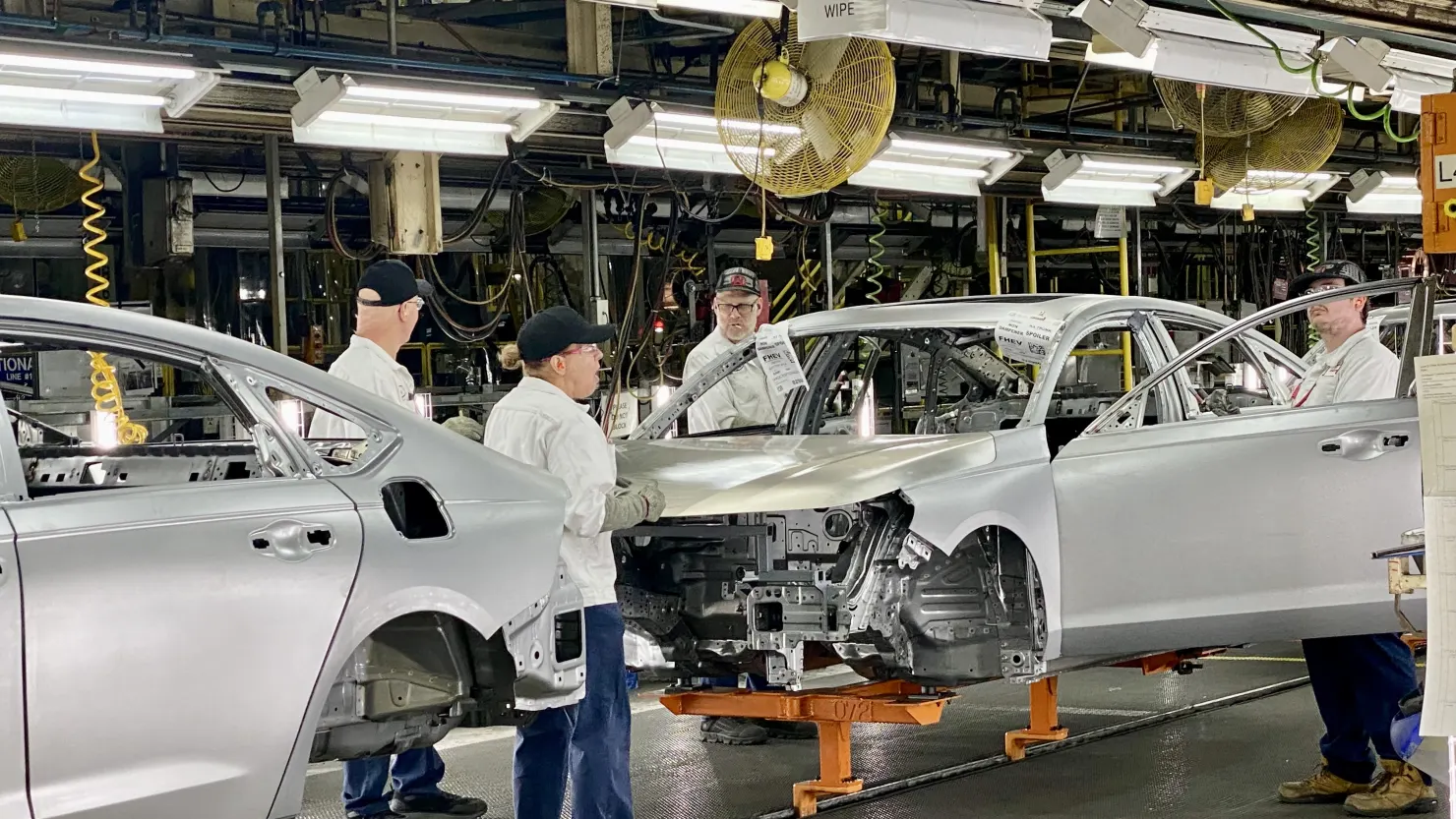
Honda’s new electric vehicle production revolution begins with $1 billion investment in Ohio

MARYSVILLE, Ohio — Honda Motor is launching the next generation of manufacturing operations in a historically unusual place for the 75-year-old Japanese automaker: Ohio.

Honda will complete more than $1 billion in new investments in the state this year, an increase from the $700 million initially announced, the company announced Wednesday. The upgrades most notably include the installation of six “giga presses” made famous by Tesla and a new “cell” manufacturing system for the battery casings of its upcoming electric vehicles.

The company’s emerging electric vehicle center in Ohio, including a separate $3.5 billion battery plant, will be the flagship of Honda’s global manufacturing operations. That includes its Marysville vehicle plant, which is capable of producing conventional, hybrid and electric vehicles on the same assembly line, officials said during a daylong tour of the plants.

“The Honda EV Center in Ohio is setting the global standard for people, technology and processes for EV production,” said Mike Fischer, head of Honda’s EV program in North America. “This is the footprint and signature performance we will use as we expand EV production regionally and globally.”

Such major manufacturing changes typically start in Honda’s native Japan before rolling out to plants in the U.S. and elsewhere, according to company officials.

The Ohio investments were initially announced in October 2022 as part of the Biden administration’s push for local manufacturing. They remain important amid President Donald Trump’s threats to raise tariffs on imports such as cars.

In 2024, Honda produced more than 1 million vehicles at five U.S. assembly plants. About 64% of them were sold in the U.S., and the rest were exported. The company has an assembly plant in Mexico.

Once completed, Honda will be able to produce about 220,000 vehicles a year at its Marysville plant, located outside Columbus in central Ohio. The 4 million square foot plant currently produces several Honda and Acura vehicles and is expected to produce the all-electric Acura RSX crossover later this year – Honda’s first electric vehicle.

The Japanese automaker was late to the game in investing in electric vehicles compared to other automakers. It currently sells two all-electric crossovers in the U.S. – the Honda Prologue and Acura ZDX – but those vehicles are built in Mexico by General Motors.

The new Acura crossover will be followed by the Honda 0 SUV and Honda 0 Saloon EV prototypes that debuted last month at the Consumer Electronics Show (CES) in Las Vegas.

The aluminum battery packs for the new electric vehicles will be produced at Honda’s engine complex near Anna, Ohio, the company’s largest engine plant in the world, having grown from a small rectangular building in 1985 to more than 2.8 million square feet.

“We are building this large-scale aluminum production technology for all Honda models,” said Tim Stroh, head of the electric vehicle battery box project. “Our goal is to roll this out to other products and other plants around the world.”

To produce battery packs and other electric vehicle parts, and potentially engines in the future, the company is installing six massive 6,000-ton high-pressure die-casting machines that will “supercast” the material, what Tesla calls “hypercasting.” The giant machines are the size of a small house and use tremendous pressure to shape parts. Currently, Honda’s die-casting machines in Ohio have pressures of up to 3,500 tons.

If done correctly, S&P Global Mobility says, Gigacasting could theoretically eliminate the welding of dozens of body parts by casting a single module, significantly reducing unit manufacturing costs.

Once the battery packs are cast, they are shipped from Anna to Marysville and other plants to be installed with battery cells from Honda’s joint venture with LG Energy Solutions and then used in final assembly of electric vehicles.

To assemble cells and battery packs in Marysville, Honda is installing nearly 60 flexible manufacturing “cells,” or areas, for assembling batteries. Unlike traditional assembly lines, where parts are installed while vehicles are moving, the new production process takes place in parallel with the main line in zones so that any potential slowdowns or problems don’t affect the main line.

“This is considered Honda’s second venture,” said Bob Schwyn, senior vice president of development and manufacturing at Honda of America. “We are using this opportunity to reimagine our approach to manufacturing.”

Honda calls its transition to electric vehicles, including fuel cells, its “second venture.” Although electric vehicles have been slower to take off in the U.S. than expected, the company is sticking with its previously announced goal of having zero environmental impact by 2050 through three key areas of action: carbon neutrality, clean energy and resource recycling.

The goal also includes selling exclusively zero-emission vehicles by 2040. Many other automakers have delayed or canceled such goals in recent years.

The investment of more than $1 billion in the existing Ohio plant also includes several new manufacturing processes and technologies to lower emissions and waste, including the use of a special form of structural aluminum that can be recycled and reused in electric vehicle battery packs.

“We are taking this opportunity to reimagine the way we make products and create new value in the area of ​​environmental responsibility,” Schwinn said. “This includes recycling our products at end of life and then recovering or reusing 100% of the materials, especially the limited materials in electric vehicle batteries, to essentially transform old Honda vehicles into new Honda vehicles.”
Related product recommendations:
RELIANCE 0-51444
Rockwell A-B 440N-S32047
Rexroth R911190042
Rockwell Automation 440T-MTBLE18AJBJBJ
YASKAWA UGRMEM-02MYR31
A-B B-10383ROD
ABB PP871 3BSE069270R1
GE IC647SHR025
EPRO PR6424/297-110
Allen-Bradley 140G-H15C4-C30140G
Bosch Rexroth 51402089-100
ICS TRIPLEX T9432
XYZ MPMA-Q8326-BR1MPMA
Reliance 0-57552-4E
PFEA112-65 3BSE050091R65
A-B 889D-R4ACDE-1F5889
ABB 22C-D030N103
GE A20B-2901-0700
A-B 64676-64UCCT
More……

How the CEO’s departure and Jeep’s “return” left Stellantis the only automaker to advertise during Super Bowl 59

DETROIT — A CEO’s exit, electric vehicles sending the industry scrambling and one company’s resurgence in the U.S. combine to make Ram and Jeep parent Stellantis the only automaker to film a Super Bowl 59 ad.

That’s according to Stellantis Chief Marketing Officer Olivier Francois, who said other automakers are skipping the big game this year due to industry uncertainty and cost-cutting, but a return to the Super Bowl is crucial for the struggling transatlantic automaker.

Francois said Stellantis chairman John Elkann, a scion of Italy’s Fiat automaker, called him after CEO Carlos Tavares abruptly left in December and told him to do a commercial during the big game to recommit to the automaker’s U.S. business.

“We had not planned to shoot a commercial. John Elkann called me in December and said, ‘I want something. I want to make a comeback. We want to show, to express that comeback story. We want to show America how important it is to the Stellantis Group,'” Francois told CNBC.

Under Francois, Stellantis, formerly Fiat Chrysler, has become known for its symbolic, unconventional ads that feature iconic celebrities and tell stories about more than just trying to sell new cars and trucks.

It all started when the automaker was trying to recover from its 2009 bankruptcy. In 2011, the company aired a surprise two-minute Super Bowl ad featuring rapper Eminem and the city of Detroit, tying the company’s resurgence to the grit and rebirth of the Motor City. The ad also showed a now-discontinued Chrysler 200 sedan.

Francois said Elkann, who is leading the search for a new CEO, told him to rediscover that “comeback” spirit for the automaker after years of cost-cutting and lackluster U.S. sales.

Francois said Elkann also told him to keep the late Fiat Chrysler CEO Sergio Marchionne in mind when crafting this year’s car ads. Marchionne, who died in 2018, was a supporter of Franois and past Super Bowl ads.

“There was a philosophy in Sergio that he believed in playing as if you had nothing to lose. He once said, ‘Mediocre isn’t worth a try,’ ” Franois said. “So the creative execution and investment for this year’s Super Bowl is the essence of that spirit.”

Since Eminem, the company’s Super Bowl ads have featured actors like Clint Eastwood, Bill Murray and singer Bob Dylan. The ads don’t necessarily feature any specific car, but they discuss culturally relevant topics like political divisions and patriotism.

This year’s Stellantis Ram Trucks ad was a more traditional comedy Super Bowl ad. Starring Glen Powell, the actor from “Twister” and “Top Gun: Maverick,” the ad reimagined “Goldilocks and the Three Bears” with trucks.

But the automaker’s two-minute Jeep ad starring Harrison Ford, the “Star Wars” and “Indiana Jones” actor, was a true homecoming for Francois.

Jeep Super Bowl Ad

Francois said Ford turned down an initial proposal for another ad. Francois said he and friend Edward Razek wrote the first version of the ad that aired at the time. Razek was a former marketing executive at Victoria’s Secret owner L Brands who resigned amid controversy in 2019.

CMOs don’t typically write scripts. It’s more common for these executives to approve agency scripts with guidance. Francois said agencies did help before the final ad, but the script and creative started inside the automaker.

In the ad, Ford discusses freedom, heroes and people writing their own stories in life because there is no “owner’s manual” (which is the ad’s title).

Several Jeep models can be seen driving and off-roading, as Ford says, with one outrunning a Ford Bronco SUV — a new competitor to the Jeep Wrangler SUV — while the actor talks about how to inspire others.

“I agreed to do this ad because of the script. It’s a straightforward account of life that ends with getting in a Jeep, and that’s the selling point. It didn’t require me to reintroduce myself or point out that I’ve done a lot of things in my life and am known for specific projects or roles,” Ford said in a statement. “It was just a quiet conversation of one person sharing ideas. I love the way it went.”

The Wrangler over the Bronco is one of two reference points for Jeep’s competitors. The other comes from the actor at the end of the ad: “Choose what makes you happy. My friends, my family, my job make me happy. This Jeep makes me happy – even though my name is Ford. Here’s my owner’s manual. Go out and write your own.”

The Jeep ad was filmed over two days in Santa Clarita, California, in early December, according to Stellaris.

“Headless Chicken”

The automotive industry has historically been one of the hot sectors for Super Bowl ads. Even during the Great Recession of 2008 and 2009, when the auto industry was hit hard, several companies such as Toyota, Hyundai and Audi aired ads.

Francois believes other automakers may not be participating in the Super Bowl this year because previous years did not bring any returns, when many automakers, including Stellantis, hyped all-electric vehicles that did not even come to market.

“There have been a lot of automakers in the past few years, and they have been hyping electric vehicles, electric vehicles that don’t even exist,” Franois said. “These people are obviously running around like headless chickens: electric vehicles, electric vehicles, electric vehicles. I mean, we’ve all been in that situation.”

Automakers regularly advertise during the NFL regular season and playoffs, including partnering with companies such as Toyota to become the “Official Automotive Partner of the NFL.” But no automaker, except Stellantis, is advertising during Sunday’s game.

Both of Stellantis’ Super Bowl ads this year feature electric vehicles, but also include traditional internal combustion engine vehicles as well as plug-in hybrid models such as the Jeep Wrangler.

Francois said it was probably a good thing that Elkann called him in early December rather than a few months earlier, because that way he could have more precisely conveyed his message, rather than just touting electric cars.

“The time had come, and I was lucky enough to have the opportunity to rewrite the script. To rewrite history, that is, not to run away like a headless chicken,” Francois said. “I was able to improvise in that moment.”

Stellantis declined to say how much it spent to produce and air the ads, which cost as much as $8 million for 30 seconds of airtime during Super Bowl 59.

But Francois said Elkann told Stellantis’s advertising and marketing chiefs: “Marketing is no longer a cost, it’s an investment.”
Related product recommendations:
Rockwell A-B 1492-MS5X9H31-40
GE 369-H1-0-B-0-0-0-0
Siemens 6ES7952-1AP00-0AA0
A-B 1489-A1C020R2 UL489
Allen Bradley 855TS-B24D4
B&R X20CP1586
A-B 871TM-B10C30-A15AC
Allen-Bradley 140G-H3F3-D11140G
Allen Bradley 1492-SPM1D320-NMCB
Woodward DPG 2401 8443-1003
RELIANCE 8646663R
KEBA CP450T
ABB 3HAC17736-1
Rockwell Automation 871L-XCB15S40871L
ABB PFEA113-20 3BSE050092R20
Rockwell Automation 156-B25CA325
More……

Search for products

Back to Top
Product has been added to your cart
phone: +86 18030177759
to whats
8618030177759
to whats
+86 18030177759
email: xiongbacarrey@qq.com